

Koryx Copper Provides Project Development Update for the Haib Copper Project in Southern Namibia
Highlights
- Process flow sheet optimization largely complete with potential for significant production and cost improvements, driven by 1) the improved mineral resource estimate 2) an optimized mine plan and 3) various process flow sheet enhancements including applying coarse particle flotation (“CPF”) to reject low-value waste rock.
- Haib test work confirms that using CPF in the milling circuit is expected to reject up to 25% of run-of-mine (“ROM”) feed as coarse tailings with only limited copper loss.
- Processed MF grade expected to increase significantly after 25% coarse gangue rejection via CPF.
- CPF is a proven flotation technology which removes low-value waste rock at coarse particle size before finer grinding and processing, thereby reducing waste rock, increasing throughput, reducing water and energy consumption and improving tailings handling and volumes.
- Potential to demonstrate significant improvements in overall project economics in the upcoming PFS, ranging from potential increases in throughput, grade, annual copper production, life-of-mine to potential reductions in stripping ratio, unit cost and process flowsheet simplification.
- All sulphide material, including previously classified sulphide heap leach (“HL”) material now expected to be treated through conventional milling & flotation (“MF”), allowing the sulphide HL to be eliminated, potentially saving significant capex and simplifying the flow sheet.
- This produces the best overall metallurgical performance and has been adopted as the PFS base-case flow sheet for all sulphide material.
- 200MVA power supply via Namibian grid and hybrid solar photo-voltaic (“PV”) with battery storage.
- Water supply from Orange River combined with off-site storage dam for 20Mm³/year. Additional Neckartal dam & pipeline option for future expansion scenario under review.
- Environmental and permitting work is progressing, with 13 specialist studies completed and environmental approval targeted for H1 2027.
-
Continued fast tracking towards publication of a Pre-feasibility Study (“PFS”) before the end of 2026.
VANCOUVER, British Columbia, June 03, 2026 (GLOBE NEWSWIRE) -- Koryx Copper Inc. (“Koryx” or the "Company") (TSX-V: KRY, NSX: KYX) is pleased to announce further progress towards the publication of the Pre-feasibility Study (“PFS”) for its wholly-owned Haib Copper Project (“Haib” or the “Project”) in southern Namibia.
The Haib deposit is a massive, disseminated porphyry copper (Cu) deposit with associated molybdenum (Mo) and gold (Au). Haib is envisaged to produce a Cu and Mo concentrate via large-scale open pit mining and mainly conventional crushing, milling and sulphide flotation with the potential for additional copper cathode production via oxide heap leaching. Ongoing process flow sheet optimization is aimed at improving project economics whilst reducing technical risk.
Heye Daun, Koryx Copper’s President and CEO commented: “We are very excited with the progress our in-house study team and specialist EPCM consultants are making with the PFS for our flagship Haib Cu-Mo-Au project which is planned to be published in late 2026.
Recent metallurgical test work confirms the potential to significantly increase the processing grade going into flotation by using Eriez’ well-proven HydrofloatTM system for Coarse Particle Flotation (CPF). Utilising CPF in a coarse gangue rejection application, flotation processing grade is expected to increase to between 0.45 and 0.50% on a CuEq basis (Years 1-10).
With the expected higher processing grade, increased tonnage and simplified flow sheet we anticipate the potential for a significant improvement in project economics with the upcoming PFS.
We have also made a lot of progress with further defining the Haib infrastructure plans, especially relating to power, water and tailings storage. Grid power will be sourced from the nearby Namibian national grid, augmented with hybrid solar PV and battery storage to deliver reliable, low-carbon energy. Our water supply strategy is based on accessing water from the nearby Orange River, in combination with significant on-site water storage to address seasonality.
Our ESIA permitting process is also advancing with all specialist baseline studies completed, and application for environmental clearance expected to be submitted mid-year. Given typical Namibian regulatory practice, environmental approval is targeted for approximately mid-2027.”
What is Coarse Particle Flotation?
Coarse Particle Flotation (“CPF”) is an innovative but commercialised technology that combines density separation with traditional froth flotation within an aerated fluidized bed. Unlike conventional flotation cells that rely entirely on bubble buoyancy in turbulent tanks, CPF techniques such as the well-proven Eriez HydroFloatTM introduce slurry into an upward-flowing current of water and air bubbles.
The rising water creates a dense, suspended "bed" of solids that inhibits settling of heavy particles. Because the upward current assists the bubbles, the system requires far less bubble-particle buoyancy. It can successfully float and recover coarse particles with as little as 1% to 10% mineral surface exposure. Gangue (waste rock) sinks through the bed and is discharged as clean, coarse tailings.
This technology is expected to be applied at Haib to facilitate a coarser grind size and reduce energy intensity in the grinding circuit. This in turn will allow milling and flotation to process up to 25% more material through the same circuit.
Haib Processing Plant Capacity and Configuration Enhancements
Test work currently in progress has demonstrated that either a combination of material sorting and coarse particle flotation (CPF), or CPF alone can be used at Haib to reject barren material from conventional flotation feed, with limited loss of copper. Earlier press releases, and particularly the Haib Project PEA published in September 2025, discussed the results of some key metallurgical test programmes. However, the 2025 PEA Report did not focus in any detail on the potential future benefits of applying the latest test result data to improve the preferred project process flowsheet and estimated mass balance.
The objectives that Koryx is now seeking to achieve are summarised below, based on test results as follows:
- Material sorting of screened crusher product (30mm to 90mm and 6mm to 10mm) has been tested successfully on Haib samples from all main areas of the planned pit. It should enable rejection of approximately 12 to 20% of ROM feed mass, containing approximately 6% to 12% of contained copper in the ROM material. The rejected waste material will mostly consist of liberated gangue minerals in the >30mm size fraction.
- Additional waste can be rejected from the mainstream flotation feed through further crushing and milling, followed by CPF of the combined >30mm mineral sorting product and a <30mm fines fraction that bypasses the mineral sorting circuit.
- CPF has been tested successfully on a 150 to 425µm size fraction of the combined sorter pre-concentrate and fines by-pass. The >150µm CPF tailings, representing approximately 25 to 30% of the mill feed, can be rejected ahead of flotation feed with approximately 4 to 11% additional loss of copper. Based on successful tests, the combined mineral sorting and coarse particle flotation circuit should reject about 35% of ROM material with 10 to 20% copper loss.
Metallurgical test work, techno-economic trade-off studies and cash flow modelling completed in Q2 2026 support the following technical descriptions and preliminary flow sheet designs for the PFS:
- The mass rejection demonstrated in 2025/2026 from separate material sorting and CPF tests and from CPF without preceding material sorting would enable the cut-off grade of sulphide material to the main milling and flotation circuit to be reduced from 0.225% Cu to about 0.175% Cu.
- 3Mtpa of crushed oxide and transitional material will be processed by copper heap leaching, solvent extraction and electrowinning.
- Low grade sulphide material will be directed to the main milling & flotation (“MF”) plant and the previously proposed chloride or bacterial heap leach for this sulphide material will no longer be required.
- With limited requirement for additional equipment and associated Capex, total annual combined quantity of material processed by MF and HL can be increased from 35 Mtpa to about 40 Mtpa, of which only 28 Mtpa of pre-concentrate will report to the flotation feed after coarse gangue rejection via CPF.
- Column leach test work indicated that the proposed commercial HL operation for the transitional and oxide material will require the addition of ferric sulphate as well as sulphuric acid. Tests and simulations have confirmed the practicality of processing copper flotation cleaner tails to recover a pyrite flotation concentrate and subsequently processing it by partial pressure oxidation to generate sulphuric acid and ferric sulphate for the heap leach circuit, should this be required. A trade-off study of this against purchase of these reagents is in progress.
Metallurgical Test Work Completed
The following metallurgical tests have been completed successfully since the PEA Technical Report was issued in September 2025. The metallurgical results were discussed above, but more detail about the methodology is provided here:
- X-ray fluorescence, X-ray transmission and magnetic resonance ore sorting technology suppliers have prepared simulations of bulk and particle sorting using core analysis data. Particle sorting tests have also been carried out using core samples provided by Koryx. For the PFS, the team focused on particle sorting because it was not possible to conduct small scale bulk sorting tests to confirm the simulations. In any commercial operation, it will be necessary to crush and screen the feed material into specific size fractions and process these in separate parallel particle sorting circuits. The completed test work was therefore carried out on several size fractions.
- All material sorting process technologies demonstrated potential to effectively identify and separate chalcopyrite from liberated gangue minerals.
- Run of mine (ROM) feed tests as well as sequential tests of mineral sorting followed by rejection of CPF coarse gangue from the milled 150 µm to 425 µm sorting pre-concentrate yielded successful results confirming that approximately 25% to 30% of mill feed can be rejected from the flotation feed.
- Mineralogical investigations of transitional/oxide material samples confirmed that only a very minor percentage of copper (usually <10%) is present in the form of chalcopyrite. Some secondary sulphide minerals such as chalcocite and bornite were detected, but about 65% of total copper in these samples appeared to be present as chrysocolla, a secondary silicate mineral that is usually amenable to sulphuric acid heap leaching.
- Three column leach tests were completed on a transitional/oxide ore sample over a continuous period of approximately 120 days. Sulphuric acid leaching, bacterial leaching at relatively low temperature and a chloride leach process all demonstrated the potential to solubilise 70 to 75% of copper in the sample over this period. The results suggest that a portion of the secondary sulphides were leached, which in turn supports the hypothesis that sulphuric acid was not the only leach reagent present.
Process Flowsheet Design
Based on the test results mentioned above in combination with a series of capacity optimisation trade-off studies which considered various crushing, material sorting, CPF, conventional mill/float and heap leach capacity scenarios, the total annual combined quantity of ROM feed processed is expected to be as follows:
- Approximately 92% of the ROM material will be processed in the sulphide milling and CGR circuit, with 75% of that material being followed by processing of pre-concentrate in the MF plant.
- The remaining oxide and transitional material will be processed in the HL plant.
The design will incorporate three 14 Mtpa crushing and screening trains incorporating high pressure grinding rolls (HPGR) in a tertiary crushing role, followed by two 18.5 Mtpa milling and CPF circuits, and two 14 Mtpa conventional flotation processing trains, as well as a single 3 Mtpa small oxide/transitional material HL pad.
- The flotation circuit will aim to produce two concentrates, namely, a primary concentrate containing >20% Cu and about 0.8 to 1 g/t Au and a secondary concentrate containing 10 to 15% Cu and > 3% Mo. Both concentrates will be dewatered prior to final product dispatch. Both concentrates are expected to be acceptable by numerous Cu smelters globally, with payability for by-product Au and Mo.
- The residual oxide/transitional material will be processed by crushing and screening, conveying and agglomeration of fines, heap leaching, copper solvent extraction with impurity control, and copper electrowinning to produce Cu cathode.
Other Trade-off Studies
In addition to the sorting and processing capacity optimisation assessments described above, additional Trade-off Study (“TOS”) investigations to be included in the PFS are as follows:
- Consideration of producing pyrite flotation concentrate on site and leaching it to produce sulphuric acid and ferric sulphate for the heap leach.
- Conveying options for transferring crushed material to the MF plant and the heap leach pad
- Flotation cell equipment/technology options
- Evaluation of alternative tailings storage facility (“TSF”) site locations and designs
- Optimisation of product transport to Lüderitz and Walvis Bay.
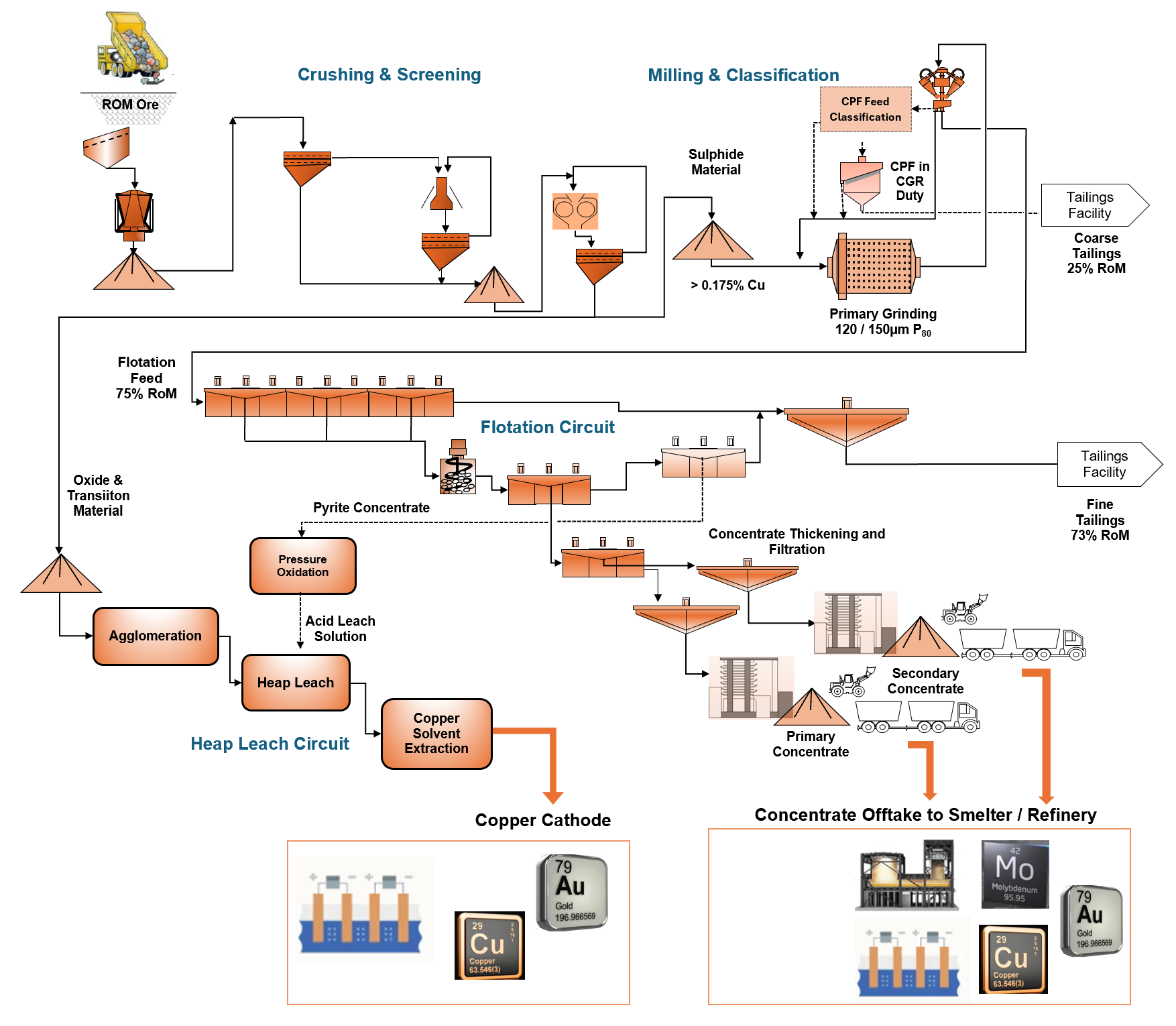
Figure 1: Conceptual Process Plant Flowsheet
Mine Bulk Power Supply
The project’s power demand will be supplied by a hybrid arrangement including a grid connection from the Namibian parastatal NamPower, combined with solar photovoltaic (“PV”) generation system with the option to add Battery Energy Storage Systems (“BESS”) to reduce overall unit rates as well as reduce early morning and late afternoon peal power tariffs.
The system is designed to meet the peak process plant and site infrastructure demand estimated at 152MVA and annual usage of 1,131GWh. This estimate is being updated as part of the PFS as the design advances. Grid supply is planned via a new double circuit 220kV overhead transmission line (“OHTL”) from Harib Substation (68km away) to a new Switching Station that will supply the mine’s substations.
The design will provide for potential future capacity of 200MVA, allowing for electric-drive haul trucks utilising trolley assist to be included in the mining operations, thereby achieving significant diesel consumption savings.
The project will provide significant upgrades to the existing NamPower infrastructure as well as providing new infrastructure to strengthen the national grid in the area as seen in the image below, all of which will be handed over to NamPower for operation, upon completion.
The project team have engaged NamPower regarding connection to the national grid by outlining the Project’s anticipated power requirements and exploring suitable connection options and assessing grid capacity in the south of Namibia.
The team are now focusing on discussions with NamPower to provide a grid power supply offer which will form the basis of the final Power Supply Agreement.
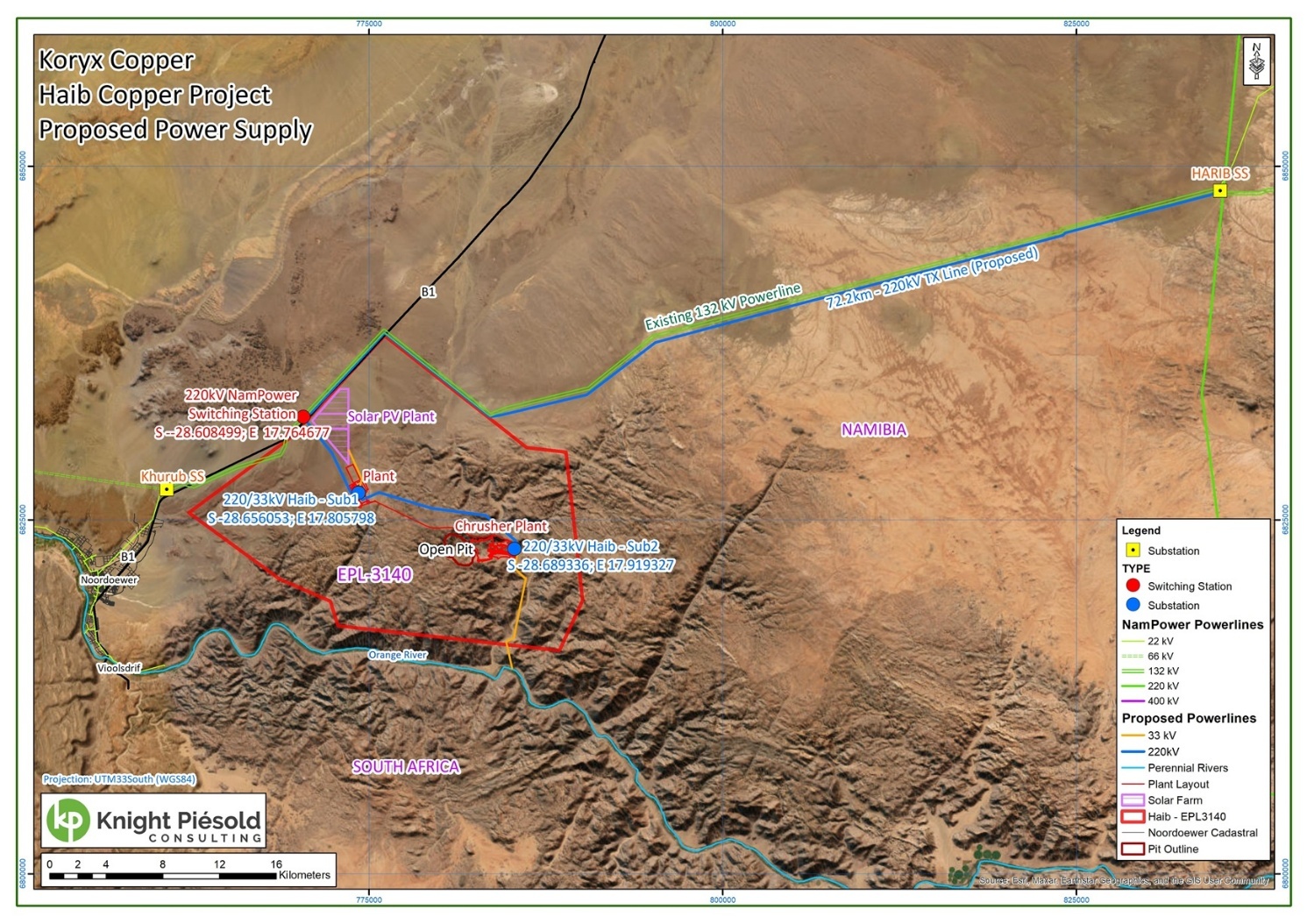
Figure 2: Proposed Grid Power Connection from the mine site to NamPower’s Harib Substation
Koryx has entered into a Memorandum of Understanding with NamPower and they will shortly commence with the design of the grid connection infrastructure.
Mine Bulk Water Supply
The study team is investigating the bulk water supply options for Haib in more detail. Two options for an estimated raw water demand of 20 million cubic meters per year (m3/yr) are being investigated: supply from the Orange River located 20km south of the project or from the Neckartal Dam located approximately 260km north of the proposed mine area.
Water supply from the Orange River is the preferred PFS option from a technical and financial perspective. The scheme identifies a single offtake point on the Orange River along with off-channel storage to offset the seasonal/dry year water availability.
Assessments of a water balance for the Orange River basin conducted by a hydrology specialist study to determine the assurance of supply for various scenarios have indicated that to obtain a high level of water supply assurance, an on-site off-channel storage (water reservoir) dam is needed to store water abstracted from the Orange River during periods of surplus flow and from which stored water can be supplied during periods when abstraction from the river will not be possible due to insufficient water, low water levels and/or droughts.
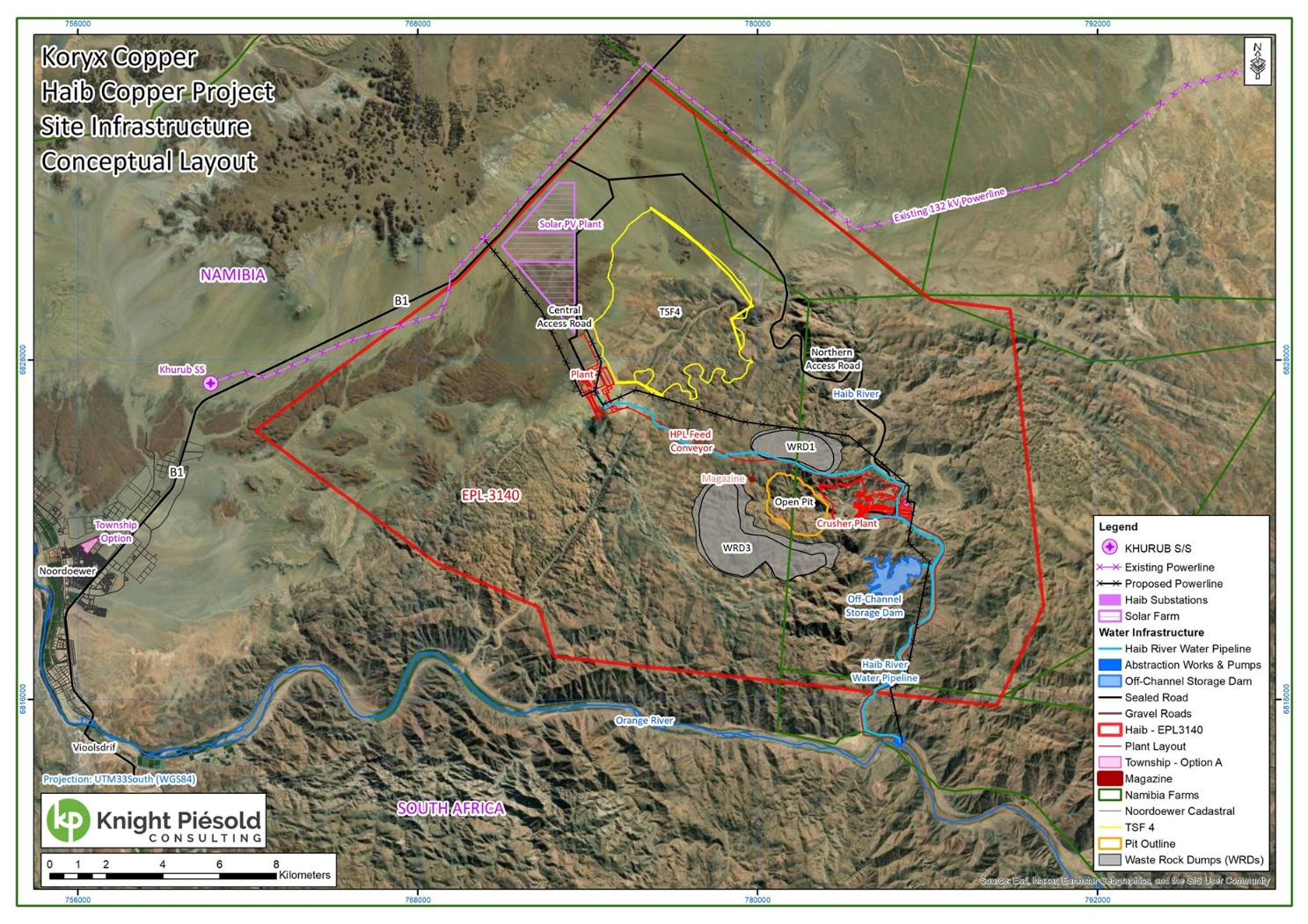
Figure 3. Updated site layout indicating power and water supply systems at the Mining License scale
Engagement with NamWater is ongoing, to ensure compliance with national bulk water supply standards. Ownership and operation of the completed system is planned to be transferred to NamWater, who will maintain and operate the scheme under an agreed volumetric tariff structure. The systems will be designed to NamWater standards, and formal agreements between Koryx and NamWater will govern the design, transfer, and cost recovery processes.
Site Environmental and Permitting
The environmental and social impact assessment (“ESIA”) has made significant progress with all of the baseline assessments completed, advances in opportunity identification, risk management, and preparation of permitting submissions. All work aligns with Namibian Regulations best practice and compliance.
Recent events include:
- The Mining License application was submitted to the Ministry of Industries, Mining and Energy (“MIME”) on 1 September 2025.
- The first round of public information sharing and engagements was held from August to November 2025, catalyzing constructive, ongoing dialogue with key stakeholders including parastatals, traditional leadership groups, and regional water users (notably farmers). As is typical for projects of this nature, the main areas of interest are water availability, power supply, employment and community development.
- The second round of stakeholder engagement was completed in April 2026, where all public feedback is currently being documented and integrated to strengthen the submission to the Ministry of Environment, Forestry and Tourism as part of the Environmental Clearance Certificate “ECC” application for the Mining Operation.
- Thirteen specialist baseline impact assessment studies were commissioned and support the ESIA. The studies respond to comments and queries by stakeholders and best practice impact management for projects of this nature. Completed studies include terrestrial biodiversity, aquatic health, water resources and demand, hydrogeological (inclusive of geochemistry), air quality, noise, archaeology and heritage, blast and vibration, visual, traffic, social and community health. These studies support a strong baseline and are directly informing project design and impact management.
- Once the currently ongoing public and stakeholder engagement process has been concluded, Koryx will submit an application for an Environmental Clearance Certificate (“ECC”) which, once approved, represents the environmental sanction for the project to proceed. It is expected that the ECC application will be submitted before the middle of 2026, with approval expected during 2027.
Studies Schedule and Timelines
The following main activities and target dates for completion are planned:
- Completion of Environmental Studies and Submission of ECC application in late Q2 2026
- Completion of pre-concentration (sorting and coarse particle flotation) tests during Q2 2026
- Completion of all processing, tailings and product logistics trade-off study (“TOS”) scenarios for the PFS during Q2 2026
- Completion of an MOU with NamWater with agreement to describing the LOM water supply strategy by Q3 2026.
- Completion of a Power Supply Agreement (“PSA”) with NamPower for the required LOM power supply by Q4 2026
- Publication of PFS technical report during Q4 2026 with exact date to be determined by progress of the resource drilling conversion program
Qualified Persons
Mr. Valentine Eugene Coetzee (B.Eng., M.Eng., Pr.Eng.) graduated from the University of Stellenbosch, South Africa and holds a Bachelor of Engineering in Chemical Engineering (Mineral Process) and a Master of Engineering (Mining: Mineral Economics) from the University of the Witwatersrand, South Africa. He has practiced his profession continuously since 2001, and gathered extensive operational and project experience. He is Director: Process and Technology, for DRA Projects Europe Pty Ltd. and is registered with the Engineering Council of South Africa (ECSA) as a Professional Engineer (no. 20070076).
Ms. Veronique Daigle (Pr. Eng., Eng.) graduated from the Université de Sherbrooke, Canada, with a degree in Civil Engineering in 2006, specializing in environmental geotechnics and hydraulics. She joined Knight Piésold Ltd. (Canada) in 2007 and worked in the mining and renewable energy sectors. Her experience includes projects in the Canadian Arctic, North and South America, Europe, the Emirates, as well as Western and Southern Africa. She joined Knight Piésold Consulting (Pty) Ltd in Namibia in 2013, expanding Knight Piésold‘s services in the mining and power industry. She specializes in mine water and tailings management and is familiar with international standards and guidelines. She is Director: Mine Services in Namibia, and registered as a Professional Engineer in Namibia (ACEN), as well as an Engineer in Canada (OIQ).
About Koryx Copper S.A.
Koryx Copper S.A. is a Luxembourg domiciled copper development Company focused on advancing its 100% owned Haib Copper Project in Namibia whilst also building a portfolio of copper exploration licenses in Zambia. Haib is a large copper/molybdenum/gold porphyry deposit in southern Namibia with a long history of exploration and project development by multiple operators.
More than 120,000m of drilling has been conducted at Haib since the 1970’s with significant exploration programs led by companies including Falconbridge (1964), Rio Tinto (1975) and Teck (2014). Extensive further drilling, metallurgical testing and various technical studies have been completed at Haib to date. Additional studies are underway aiming to demonstrate Haib as a future long-life, low-cost, low-risk open pit, sulphide flotation copper project with the potential for additional copper production from heap leaching.
Mineralisation at Haib is typical of a porphyry copper deposit and is dominantly chalcopyrite with minor bornite and chalcocite present and only minor secondary copper minerals at surface due to the arid environment. Haib is one of only a few examples of a Paleoproterozoic porphyry copper deposit in the world and one of only two in southern Africa (both in Namibia). Due to its age, the deposit has been subjected to multiple metamorphic and deformation events but still retains many of the classic mineralisation and alteration features typical of these deposits. The mineralisation is dominantly chalcopyrite with minor bornite and chalcocite present and only minor secondary copper minerals at surface due to the arid environment.
Further details of the Haib Copper Project are available in the technical report titled “March 2026 Mineral Resource Estimate Haib Copper Project, Namibia, National Instrument 43-101 Technical Report” dated effective March 16, 2026. The report and other information are available on the Company's website at www.koryxcopper.com and under the Company's profile on SEDAR+ at www.sedarplus.ca.
Additional information is also available by contacting the Company:
Julia Becker
Corporate Communications
jbecker@koryxcopper.com
+1-604-785-0850
Neither the TSX Venture Exchange nor its Regulation Services Provider (as that term is defined in the policies of the TSX Venture Exchange) accepts responsibility for the adequacy or accuracy of this release.
Cautionary Statement Regarding Forward-Looking Information
This press release contains "forward-looking information" within the meaning of applicable Canadian securities legislation. Forward-looking information includes, without limitation, statements regarding the future or prospects of the Haib project or the Company, including prospective production rates and life-of-mine, the timing of publishing a PFS, the commencement of trading of the Shares under the new Company name, and the effective date of the new CUSIP and ISIN assigned to the Shares. Generally, forward-looking information can be identified by the use of forward-looking terminology such as "plans", "expects" or "does not expect ", "is expected ", "budget", "scheduled", "estimates", "forecasts", "intends", "anticipates" or "does not anticipate", or "believes", or variations of such words and phrases or state that certain actions, events or results "may", "could", "would", "might" or "will be taken", "occur" or "be achieved". Forward-looking statements are necessarily based upon a number of assumptions that, while considered reasonable by management, are inherently subject to business, market, and economic risks, uncertainties, and contingencies that may cause actual results, performance, or achievements to be materially different from those expressed or implied by forward-looking statements. Although the Company has attempted to identify important factors that could cause actual results to differ materially from those contained in forward-looking information, other factors may cause results not to be as anticipated, estimated, or intended. There can be no assurance that such information will prove to be accurate, as actual results and future events could differ materially from those anticipated in such statements. Accordingly, readers should not place undue reliance on forward-looking information. Other factors which could materially affect such forward-looking information are described in the risk factors in the Company's most recent annual management discussion and analysis. The Company does not undertake to update any forward-looking information, except in accordance with applicable securities laws.
Photos accompanying this announcement are available at https://www.globenewswire.com/NewsRoom/AttachmentNg/fe5538ad-9718-43f8-9524-e7f671d8ebe0
https://www.globenewswire.com/NewsRoom/AttachmentNg/1e6deabb-81f6-45c1-b1fb-55f14f8e7682
https://www.globenewswire.com/NewsRoom/AttachmentNg/572af1c1-df32-43b2-a2c7-cd345535e793


Figure 1
Conceptual Process Plant Flowsheet
Figure 2
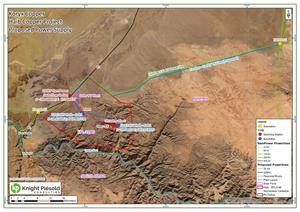
Proposed Grid Power Connection from the mine site to NamPower’s Harib Substation
Figure 3
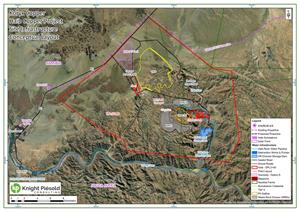
Updated site layout indicating power and water supply systems at the Mining License scale
Legal Disclaimer:
EIN Presswire provides this news content "as is" without warranty of any kind. We do not accept any responsibility or liability for the accuracy, content, images, videos, licenses, completeness, legality, or reliability of the information contained in this article. If you have any complaints or copyright issues related to this article, kindly contact the author above.
